Most brand guidelines templates are design files: a Figma, Canva or InDesign layout with placeholder logos. They look good, but the hard part isn't the layout. It's knowing what to put on each page.
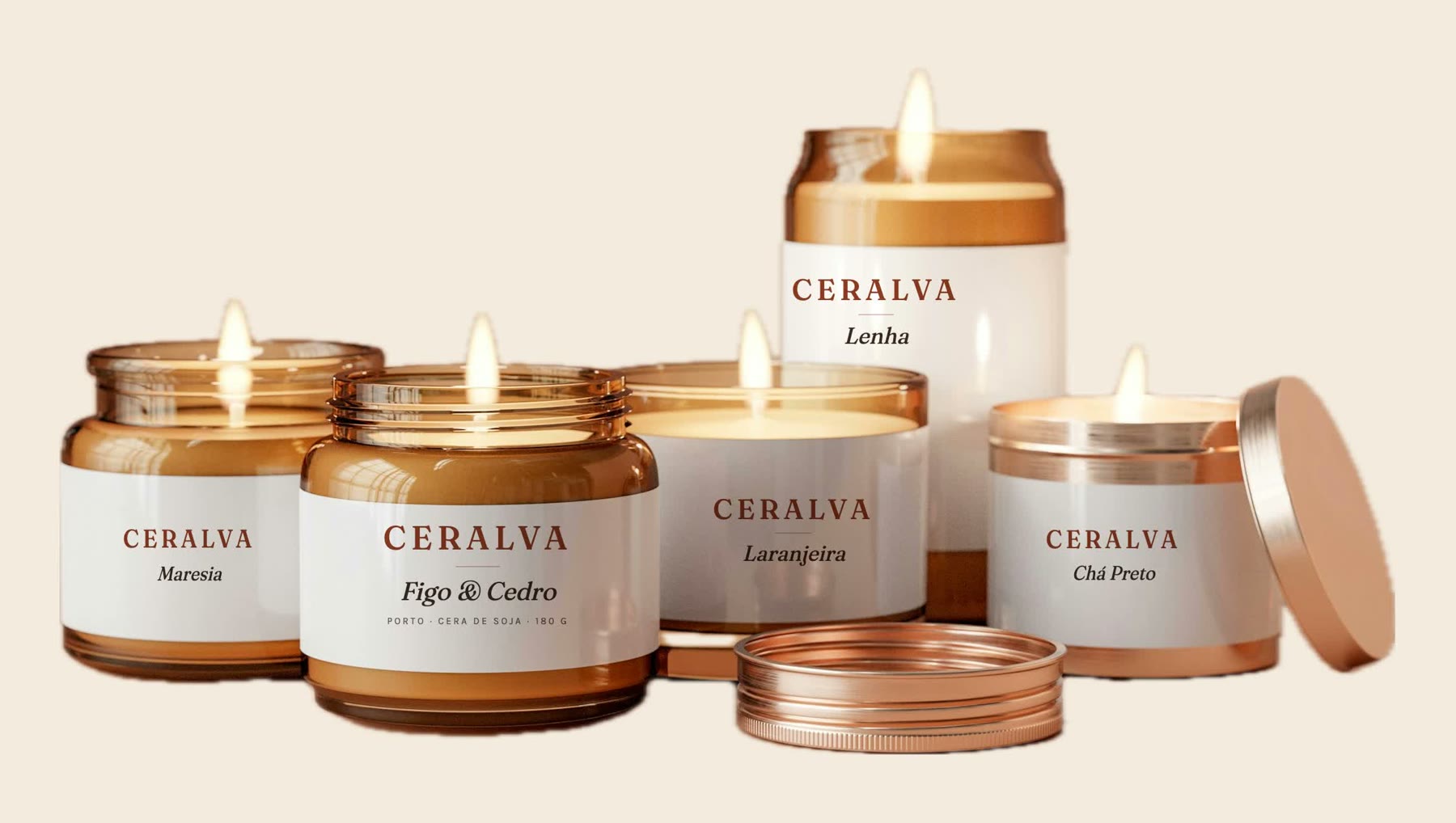
So here's the template as an outline. Copy it into any document or design tool, fill in each section, and you'll have complete guidelines. Every part has an example from Ceralva, a Porto candle maker and one of our example brands.
The outline
Copy this as your starting point:
1. Cover
   Brand name, logo, one line on what you do

2. Logo
   Main logo, icon, light and dark versions
   Clear space rule
   Four mistakes to avoid

3. Colors
   Each color: name, role, HEX, RGB, CMYK
   Tints and shades for main colors
   Which text color works on which background

4. Typography
   Heading font, body font, where to get them
   Size scale: display, H1 to H4, body, small

5. Voice
   Three traits, each with one line we'd write
   and one we wouldn't

6. Imagery
   Photo style, product shots, patterns

7. In use
   Website, social posts, packaging or signage

8. Ready-made files
   Social covers, profile picture,
   business card, email signature

9. Design tokens (if you build websites or apps)
   CSS variables, Tailwind theme, DESIGN.md
Filling in each section
Cover
Your logo, your name and one sentence about what you do, ideally lifted from your own website. Ceralva's: "Slow light, poured in Porto."
Logo
Show the logo on the background it's meant for. Then the clear space rule, then the mistakes. Keep the mistakes visual: a stretched logo, a rotated logo, a recolored logo, a logo with a drop shadow.
Colors
Give each color a job. Ceralva's palette:
| Color | Role | HEX |
|---|---|---|
| Terracotta | Primary: buttons, links, key moments | #A8482A |
| Sage | Accent and panels | #7C8466 |
| Cream | Background | #F3EBDD |
| Dark brown | Text | #2B211C |
Add RGB and CMYK next to each. If you're not sure how they relate, read HEX vs RGB vs CMYK.
Typography
Ceralva uses Fraunces, a soft serif, for headings and Karla for body text. Write the size, line height and weight for each level so nobody improvises.
Voice
Three traits is the sweet spot. Each one gets a name, a one-line note on what it means, and a pair of sentences. From Ceralva's book:
Plainly precise. State facts like batch size and numbering directly, without extra adjectives.
We say: "Small batches of 60, numbered on the base."
Use sentences you've actually written. They're more convincing than anything invented for the guidelines.
Imagery
For a product brand, this is where product photos go. Ceralva's book shows the candles on cream, on terracotta, and in a real room.
In use and ready-made files
Screenshots of your website, then the files people need most often. These two sections stop people reinventing your LinkedIn banner every time someone joins the team.
See it filled in
Here's the whole outline completed for Ceralva. Click through it page by page.
Tips that make a template work
- Write for the person making something on a Friday afternoon. Short sentences, clear rules, pictures over paragraphs.
- Use real examples, not placeholders. Rules make more sense when you can see them applied.
- Keep it in one place people can find. A link beats a PDF lost in someone's downloads folder.
- Update it when things change. Out-of-date guidelines are worse than none, because people trust them.
Frequently asked questions
Is there a free brand guidelines template?
Yes, the outline above is free to copy into any document or design tool. Design apps also offer free visual templates, but you'll still need to decide what goes in each section.
What format should brand guidelines be in?
A shareable link is easiest to keep current, with a PDF for people who need a file. If you build websites or apps, add the colors and fonts as code too.
Can I make brand guidelines from my website?
Yes. Your website already holds your logo, colors, fonts and the way you write. Identitas reads them and builds the guidelines for you. Paste your address below to try it.
See your own brand as a book.
Paste your website. The scan is free and takes about a minute.